

You may already have three or four interior design agencies on your shortlist. Their projects look polished, the first meetings went well, and the proposals may even cover similar services. The difficult part is deciding which team can actually handle your villa, penthouse, or premium apartment once the design moves beyond the presentation stage.
For this guide, I checked Dubai fit-out requirements, Emaar home-modification rules, recognised project-stage guidance, and recent construction research on communication and planning. These sources all point to the same practical need. Before signing, the client should understand how the agency will handle design development, technical work, costs, procurement, site decisions, approvals, and handover.
So if an agency shows you a completed villa, find out what its team actually delivered. If project management appears in the proposal, establish who deals with a contractor when something on site does not match the drawings. And if you receive a completion date, check what approvals, decisions, and orders need to happen for that date to remain realistic.
Keep reading to see how to test each of these areas before choosing an interior design agency.
Start With How Much of the Project You Want the Agency to Handle
An individual designer can work well when the project mainly needs creative direction, layouts, colours, or furniture selection. A small studio may also manage a complete home if it has the right technical support.
Larger projects often involve more people and more decisions. Design, technical drawings, custom joinery, furniture sourcing, procurement, contractor coordination, and site follow-up may all need to move together.
Before comparing fees, look through the agency’s interior design services and decide which parts of the project need to sit with the same team.
Then compare that list with the written proposal.
The words “full service” can mean different things from one agency to another, so the scope should clearly show who handles each part.
8 Checks That Tell You More Than the Sales Presentation
You do not need to become an expert in drawings, contracts, or construction. You only need to know what evidence to request and which answers need more detail.
1. Follow One Portfolio Project From the First Idea to the Finished Room
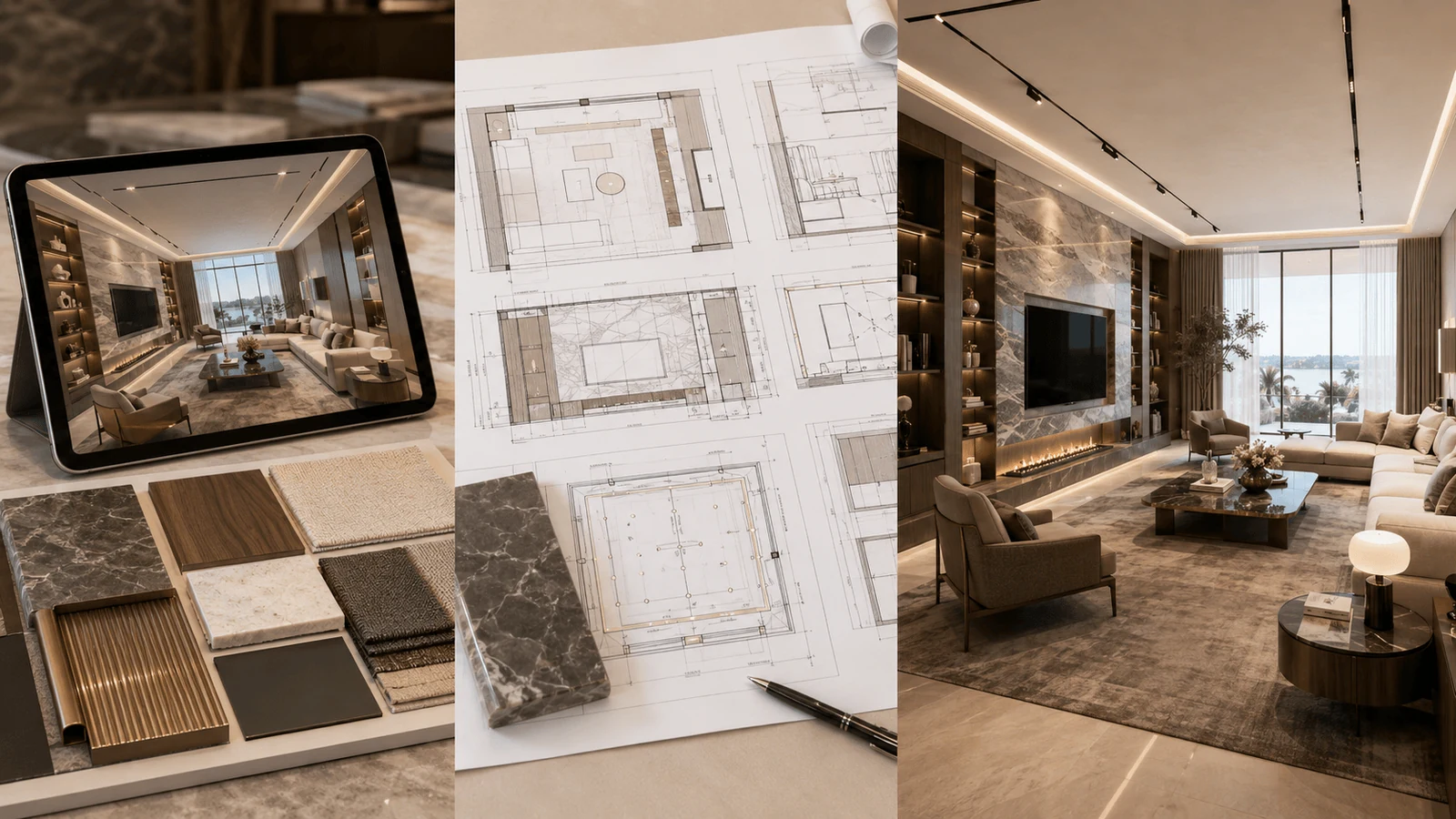
Start with the agency’s interior design portfolio and choose a project close to yours in type and scale.
For a large Dubai villa, one similar villa can tell you more than ten unrelated commercial projects. Go through that project with the team and find out how the work developed.
What did the first concept look like? Which drawings did the agency prepare? Was the joinery custom-made? Who selected the stone and lighting? Did the team stay involved during installation?
Also confirm if the images show completed work or 3D visuals.
This gives you a clearer view of the agency’s actual experience because you can see how the project moved from concept to completion.
If you are still building your shortlist, this comparison of interior design agencies in Dubai can help with the first round of research.
2. See What Happens After You Approve the 3D Views
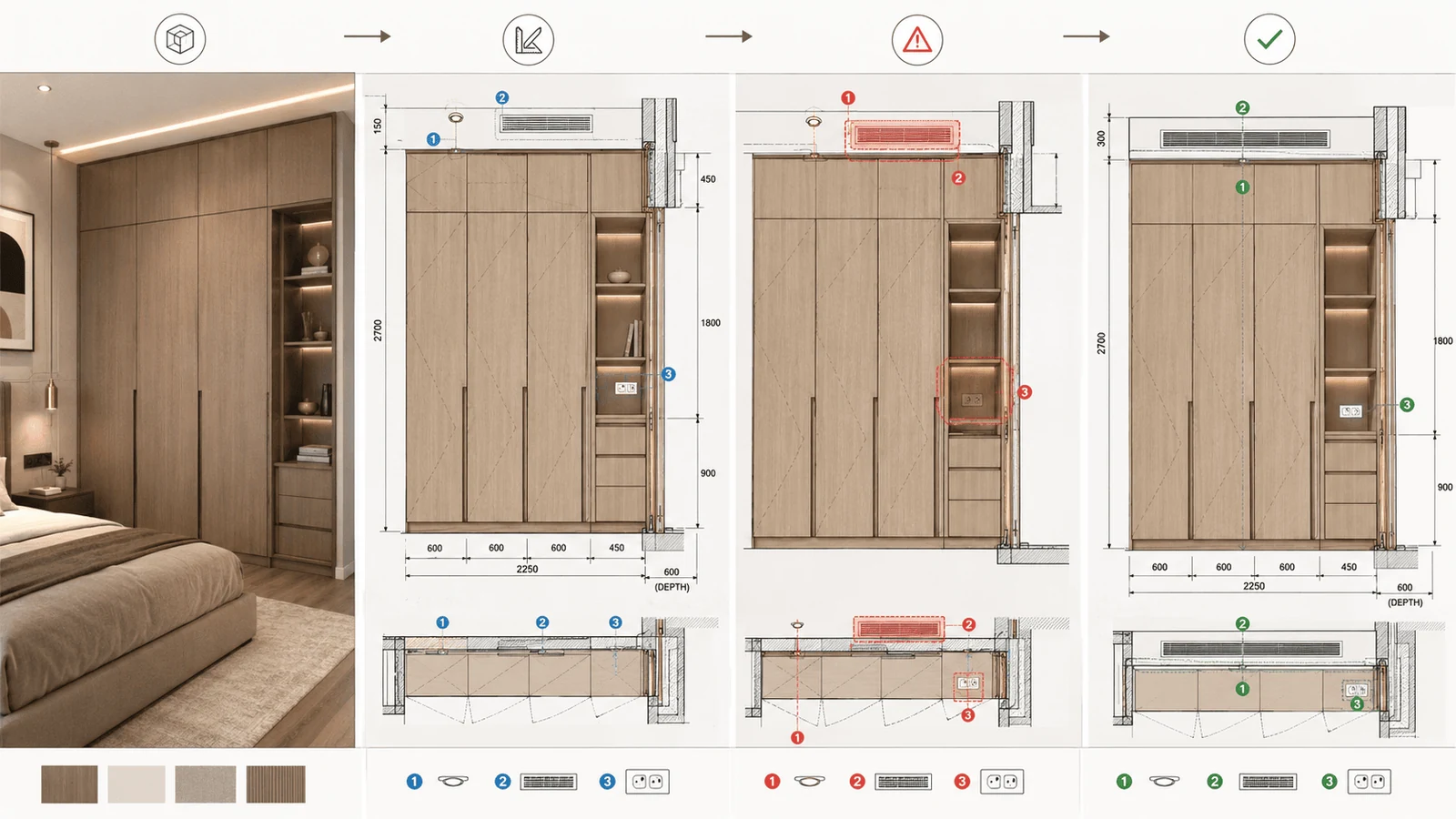
A 3D image can show you how the room should look, but the site team still needs clear information to build it.
Take a full-height custom wardrobe as an example. Its size can affect electrical points, lighting, ceiling details, AC grilles, and nearby finishes. If those parts are worked out separately, the clash may only become obvious when the carpenter reaches the site.
During the consultation, request a sample technical package from an older project.
You may see floor plans, elevations, lighting layouts, ceiling plans, material details, and joinery drawings.
You do not need to understand every symbol. Pick one custom feature and have the team explain how it moves from the 3D design into the drawings used for construction.
Also confirm when important choices become fixed, because a late change to stone, lighting, joinery, or sanitaryware can affect several connected parts of the project.
3. Put Two Proposals Side by Side Before Deciding Which Costs Less
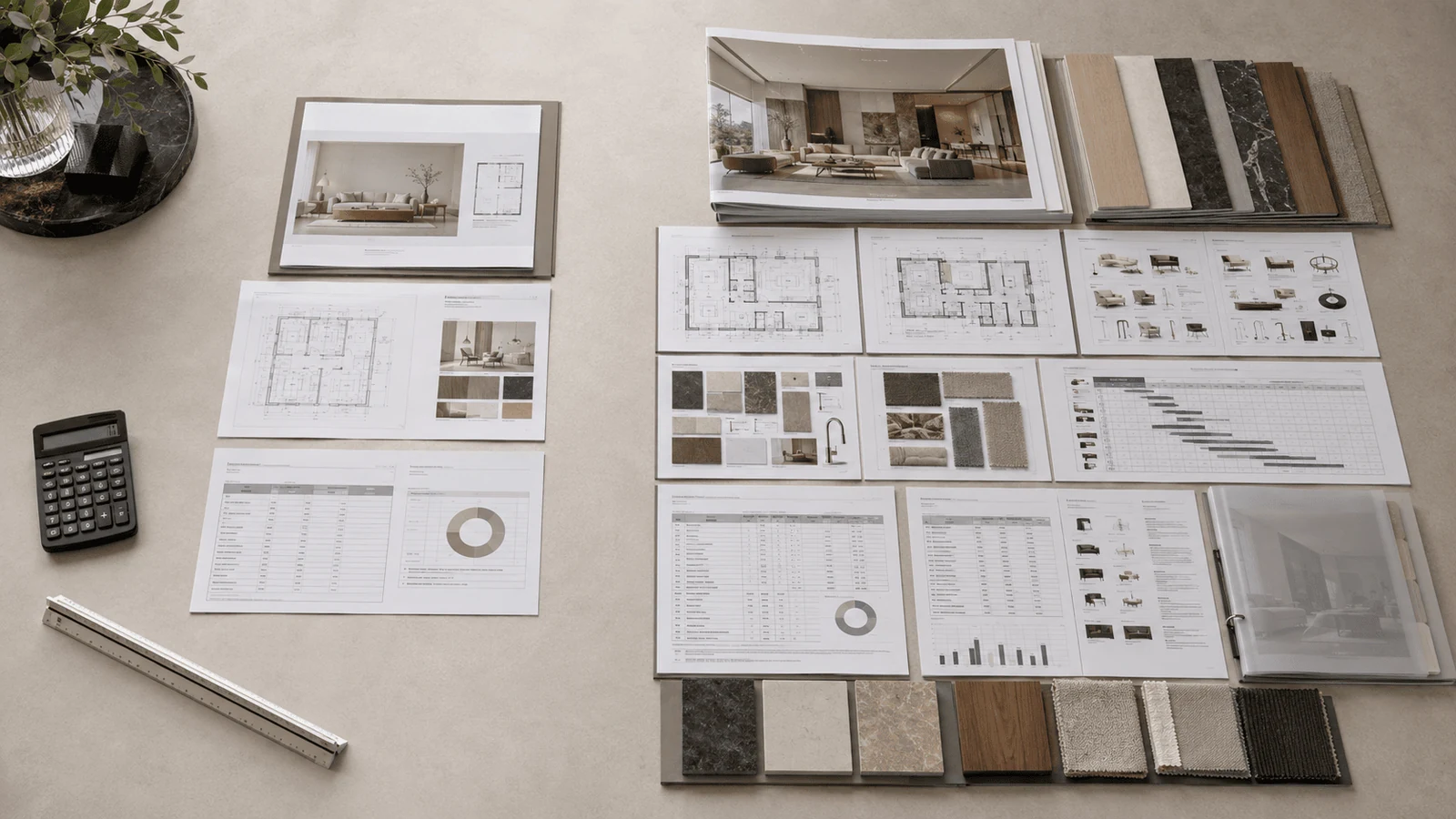
A lower design fee can look attractive until important work appears outside the quote.
Place the shortlisted proposals next to each other and compare the same items. Check the number of revisions, technical drawings, site visits, procurement, contractor meetings, delivery coordination, styling, snagging, and anything listed as an exclusion.
Then look at how the budget will be managed after design begins.
The agency should explain when estimates are updated and how extra costs are shown before approval. Procurement fees also need a clear explanation, including mark-ups, delivery charges, installation, taxes, and third-party fees where they apply.
One proposal may seem cheaper because some costs appear later in the project.
By the end of this discussion, you should know what the agency fee covers and which costs will come from somewhere else.
4. Know Who Makes Decisions Once Work Starts on Site
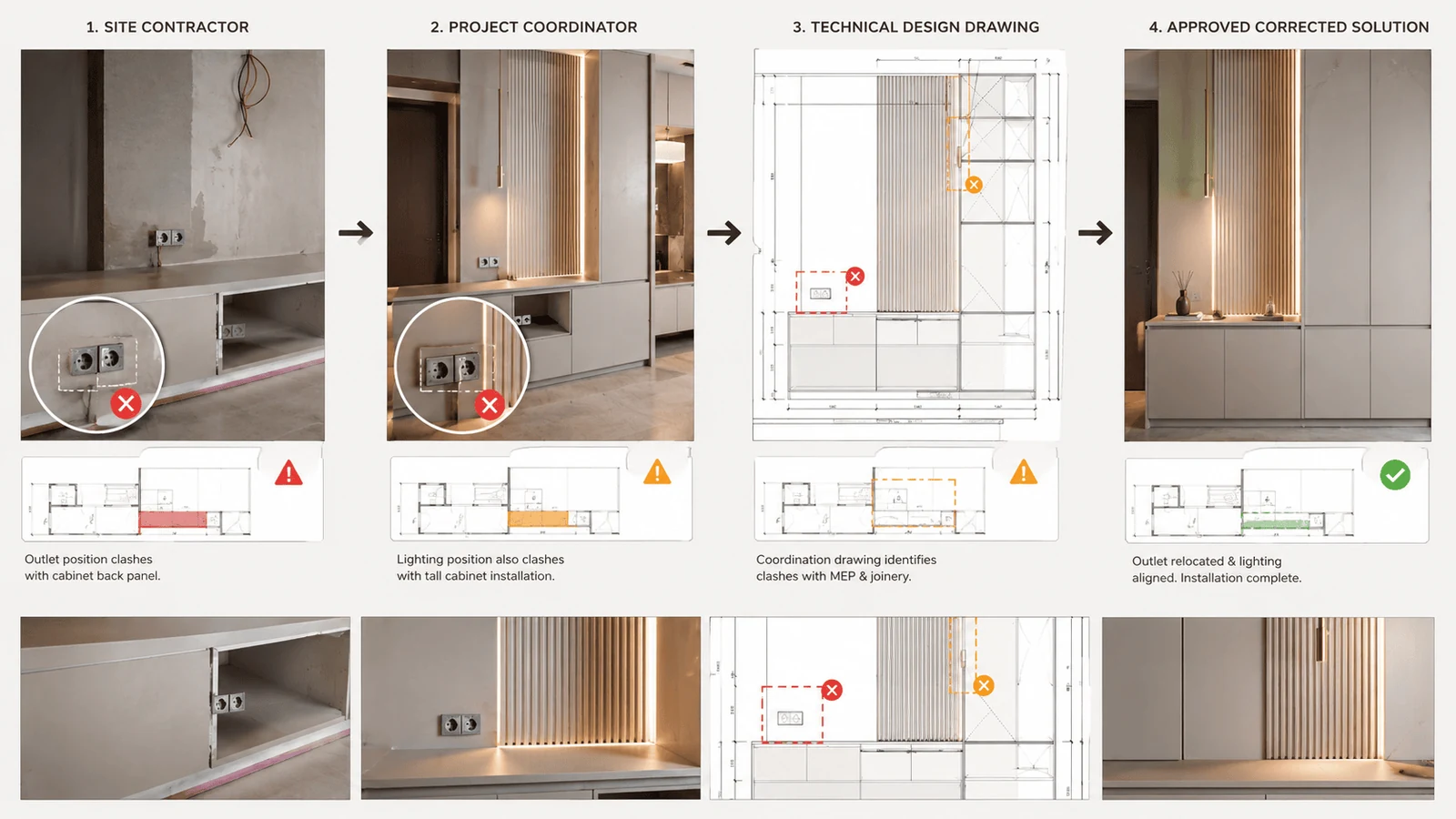
The person presenting the project may not be the person managing it every day.
Find out who your regular contact will be and what that person can approve. Then establish who handles contractor questions, design changes, and problems that can affect cost or time.
Think about a simple site issue. The joinery contractor finds an electrical point exactly where a cabinet needs to go. Someone needs to check the drawings, agree on the fix, and record the decision.
Clear communication becomes more important once several teams are working on the same project.
A 2026 study by Abhishek Tank, Aryansinh Rajput, and Kamalendra Kumar Tripathi surveyed 110 construction professionals. Communication and planning gaps were among the most critical problems identified in the construction communication study.
You can also look at the people behind the agency and confirm which of them will actually work on your project.
A broad answer such as “our team handles everything” is not enough. The responsibility should sit with a named person or role.
5. Ask What “Premium Materials” Means for Your Actual Home

A small material sample can only tell you so much.
Natural stone is a good example. You may like the colour of one sample, but several full slabs can have different veins, tones, and markings.
If the stone will cover a large floor or feature wall, find out how the slabs are selected and matched before cutting starts.
Custom joinery needs the same level of care. Check if you will approve only a small finish chip or a fuller sample showing timber, metal trim, edge detail, and hardware together.
For imported furniture and lighting, confirm when lead times are checked and who follows the order through delivery.
The same question applies if an item arrives damaged or the supplier can no longer provide the original choice.
Access to premium suppliers and craftsmen becomes more useful when the agency also manages selection, quality, delivery, and installation. That wider level of support often forms part of high-end interior design services.
If the overall look is still being decided, reviewing different luxury interior design styles can also make the material discussion more specific.
6. Check What Your Dubai Property Will Actually Allow
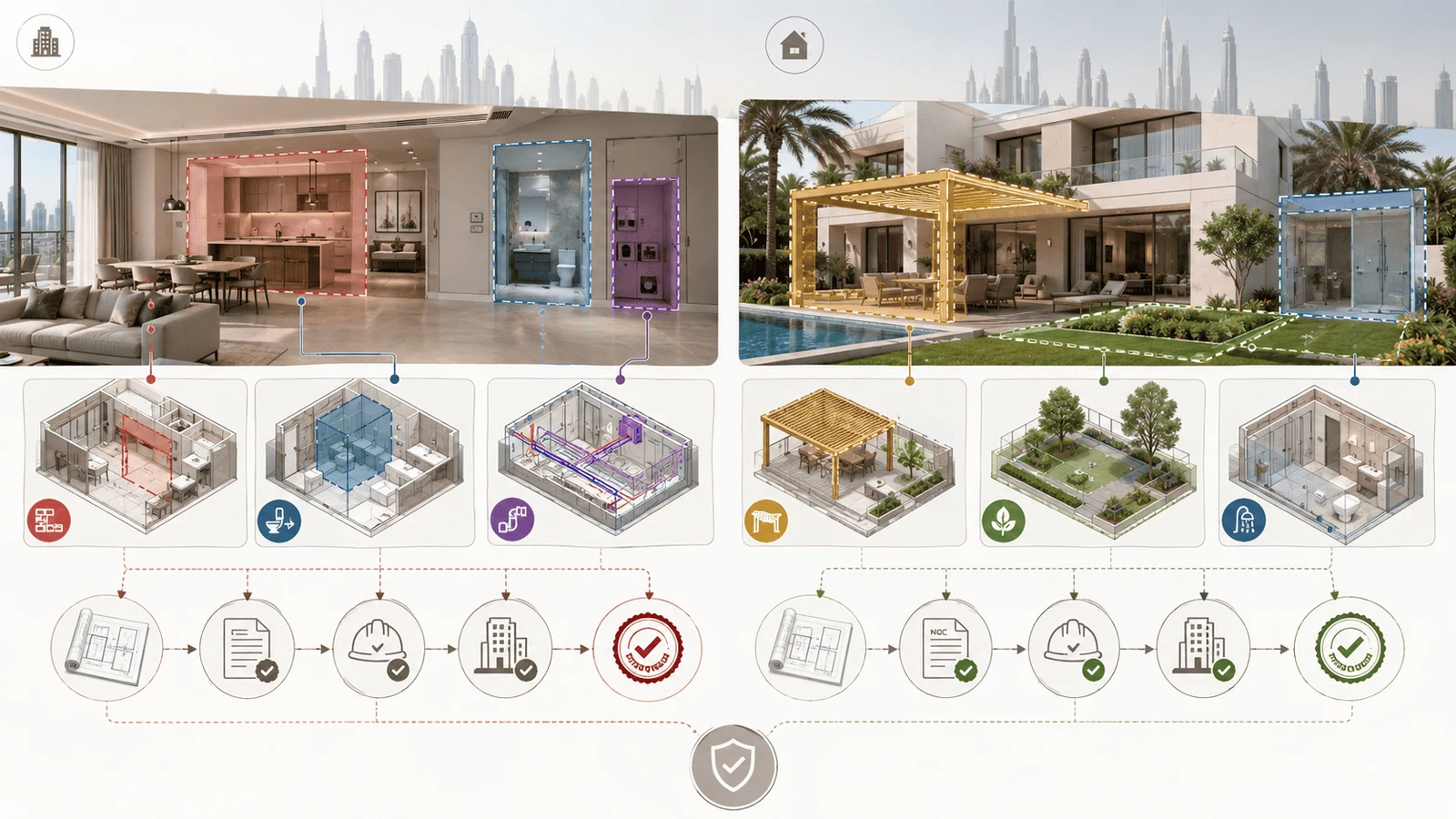
The property itself can change what is possible.
You may want to open a kitchen, move a bathroom, add a pergola, change landscaping, or alter part of the villa. Before too much design work goes into that idea, the relevant approvals need to be understood.
For projects under its jurisdiction, Dubai Development Authority lists documents such as a contractor appointment letter, building-owner NOC, relevant authority NOCs, and approved or proposed drawings for a fit-out permit.
Its current estimated delivery time is two working days once a complete application has been submitted. You can check the current Dubai Development Authority fit-out permit requirements before discussing responsibilities with the agency.
Community requirements can add another layer. Emaar currently says kitchen and bathroom renovations require a community NOC. Contractors may also need access permission before work begins, so its home modification requirements are worth checking if your property falls within an Emaar community.
Give the agency your exact property details and ask what applies there.
Who prepares the drawings? Who submits the NOC? Who follows up if a revision comes back? And has that time already been included in the programme?
These answers are more useful than a simple “yes, we handle approvals.”
For villas, discuss wet areas, landscaping, extensions, and any structural changes. In apartments and penthouses, building management and contractor access can also affect the schedule.
7. Ask What Needs to Happen for the Completion Date to Stay Realistic
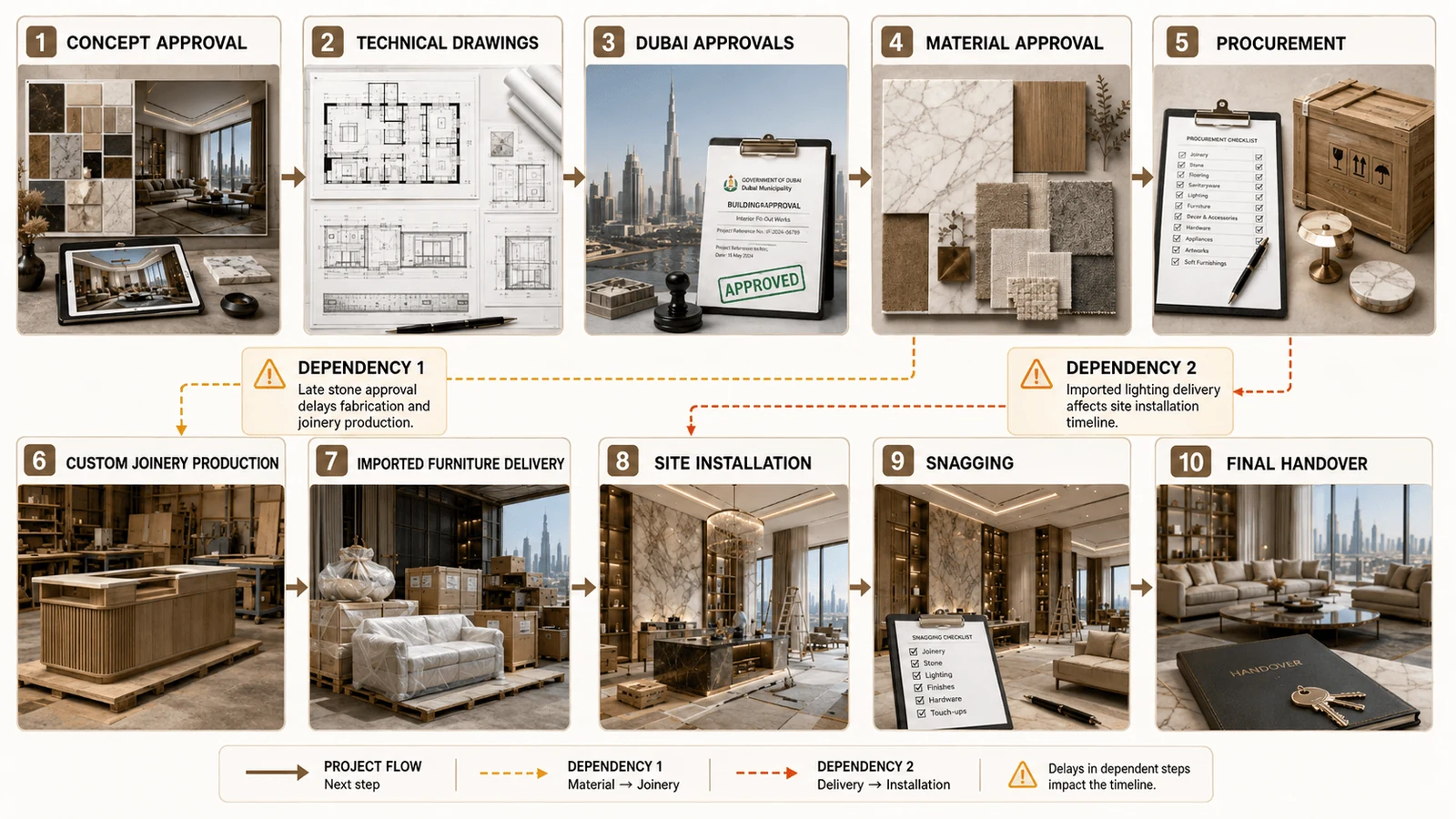
If an agency says the project will finish in June, the next question should be what needs to happen for June to remain realistic.
The drawings may still need approval. Stone, sanitaryware, lighting, or furniture may need to be approved by certain dates. Custom joinery needs production time, and imported pieces can take longer again.
A delay in one decision can affect the work that follows.
Have the agency break the programme into design, technical drawings, approvals, procurement, site work, installation, snagging, and handover.
Then look at the parts that depend on you.
You should leave this discussion knowing which decisions need to happen early and which items have to be ordered well before they appear on site.
8. Find Out Who Is Still Involved After Installation
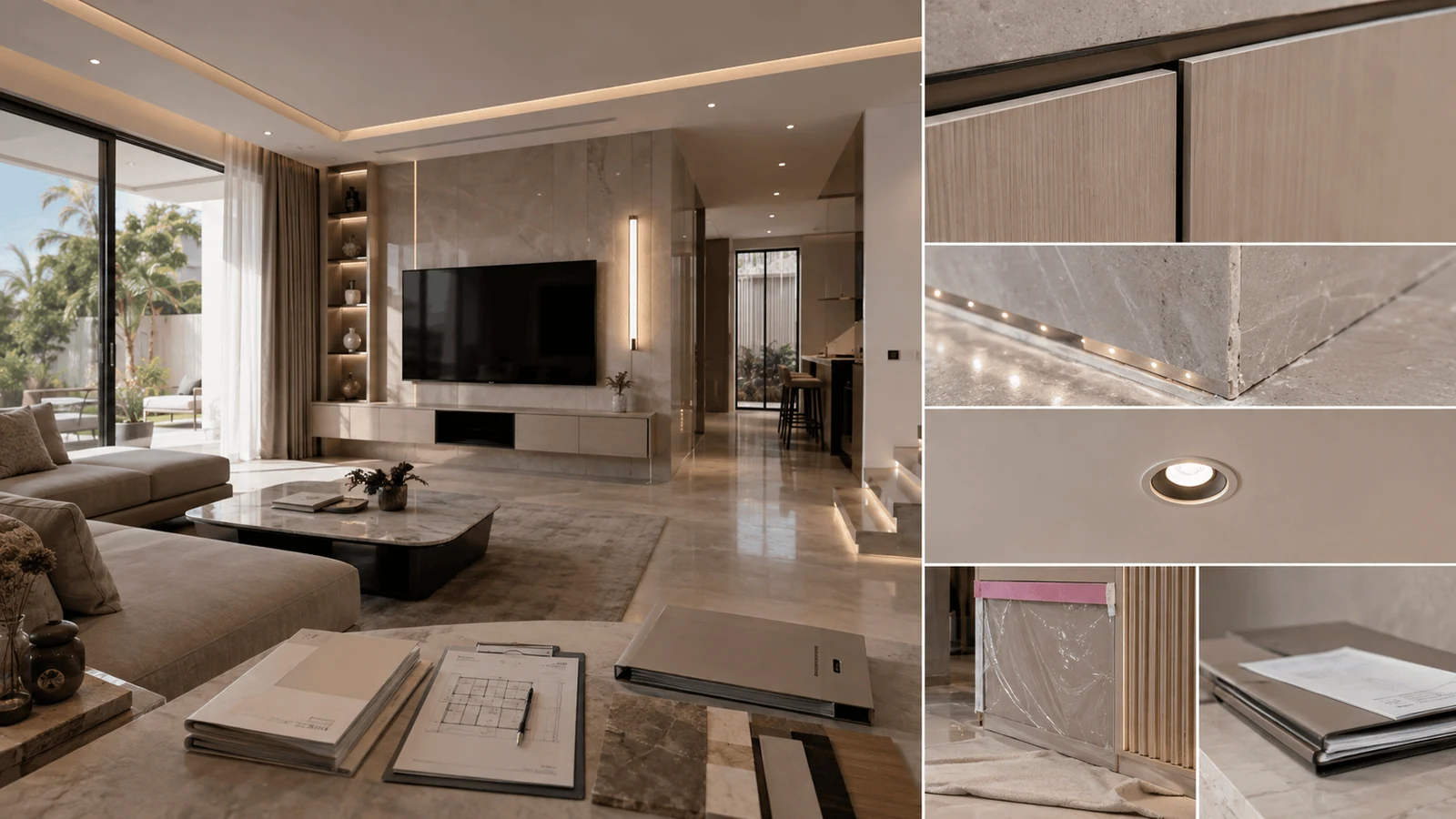
Near the end of a project, a room can look complete while several smaller problems still need attention.
A cabinet door may sit slightly out of line. A stone edge may need correction, or a light fitting might fail during testing.
Find out who creates the snagging list and who checks that those items have been fixed.
Warranties, care information, spare materials, and supplier details should also be clear. For custom pieces, confirm who you contact if something needs adjustment after handover.
This is where the meaning of “project completion” needs to be specific.
You should not reach the end of the project and discover that the agency considers its work finished while suppliers and contractors still have unresolved items.
Use the First Consultation to Understand How the Relationship Will Work
Bring your floor plan, current property photos, a rough budget range, and a few images that help explain what you like.
You do not need to know the name of every design style before the meeting.
The agency should also ask how you use the property. If you entertain often, have young children, collect art, work from home, or regularly host family, those details can change the design brief.
Your preferred level of involvement should come up as well. Some clients want to approve every visible item, while others prefer the team to narrow the choices before presenting them.
Before the meeting ends, get clear answers to these questions:
- Which finished project is closest to mine?
- What does your team deliver after concept approval?
- Who will manage my project every day?
- How will budget changes be communicated?
- What sits outside the design and procurement fees?
- Which approvals could apply to my property?
- Who deals with design questions from the contractor?
- How are custom materials and joinery approved?
- Which client decisions can delay the programme?
- What happens during snagging and after handover?
A vague answer does not always mean there is a problem, but it does mean the question needs to go further.
By the end of the meeting, responsibilities should be clear enough that you know who handles what once the project starts.
Compare the Final Two or Three Agencies on the Same Points
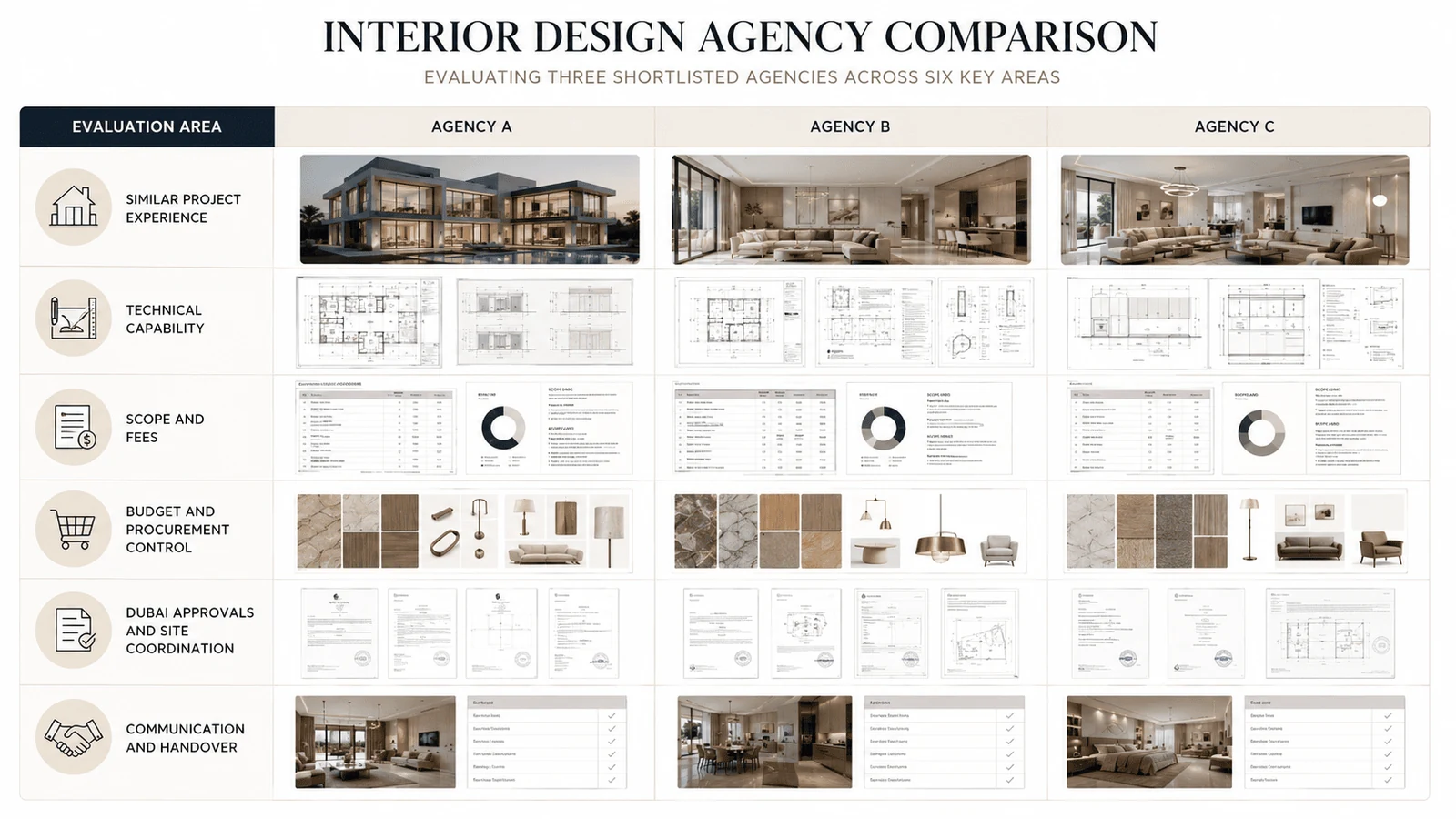
Once two or three agencies have shown that they can handle the project, adding more names usually makes the comparison harder.
Searching for the best interior design agency can help during the first stage of research, but the final choice should come from evidence that relates to your property.
Compare the remaining agencies under the same six areas:
- Experience with a similar project
- Technical and site capability
- Clear scope and fees
- Budget and procurement control
- Dubai approvals and contractor coordination
- Communication, snagging, and handover
One agency may have the portfolio you like most, while another may show much stronger control over technical work, procurement, or site coordination.
Looking at the same evidence across every proposal makes that difference easier to see.
Choose the Agency That Can Explain What Happens Next
By this stage, how to choose an interior design agency should feel less like a choice between portfolios.
You should know what happens after concept approval, what technical information the team prepares, who monitors the budget, and how custom materials are approved.
You should also understand which Dubai approvals may apply and who manages site questions, snagging, and handover.
These details deserve attention before signing because many costly project problems appear after the design has already been approved and work has started.
Interior Design Agency works on luxury residential and commercial interiors across Dubai and the UAE.
If you are planning a villa, penthouse, premium apartment, or another high-end property, you can discuss your project with the team and use the questions in this guide to make that first conversation more useful.
FAQs
How Many Interior Design Agencies Should I Compare?
Three or four serious options are usually enough. Once you have a strong shortlist, comparing the same project details across each agency will help more than collecting another ten names.
What Should I Ask an Interior Design Agency to Show Me?
Start with one completed project similar to yours. Ask to see the concept, sample technical drawings, scope, timeline, and details of what the agency handled during sourcing and site work.
Should I Choose the Agency With the Lowest Design Fee?
Only after the scope has been compared properly. A lower fee may leave out technical drawings, site visits, procurement work, delivery coordination, or other services included by another agency.
What Makes a High-End Interior Design Agency Different?
Look at the level of technical work, custom design, material sourcing, procurement, site coordination, quality checks, and handover support. The proposal should make the exact level of service clear.
Who Handles Interior Design Approvals in Dubai?
It depends on the property and the work involved. The agency should identify the relevant authority, developer, or building requirements and explain who handles each submission.
When Should I Contact an Interior Design Agency?
For a major renovation or new high-value property, involve the agency before important layout, lighting, material, and contractor decisions have already been fixed.
